
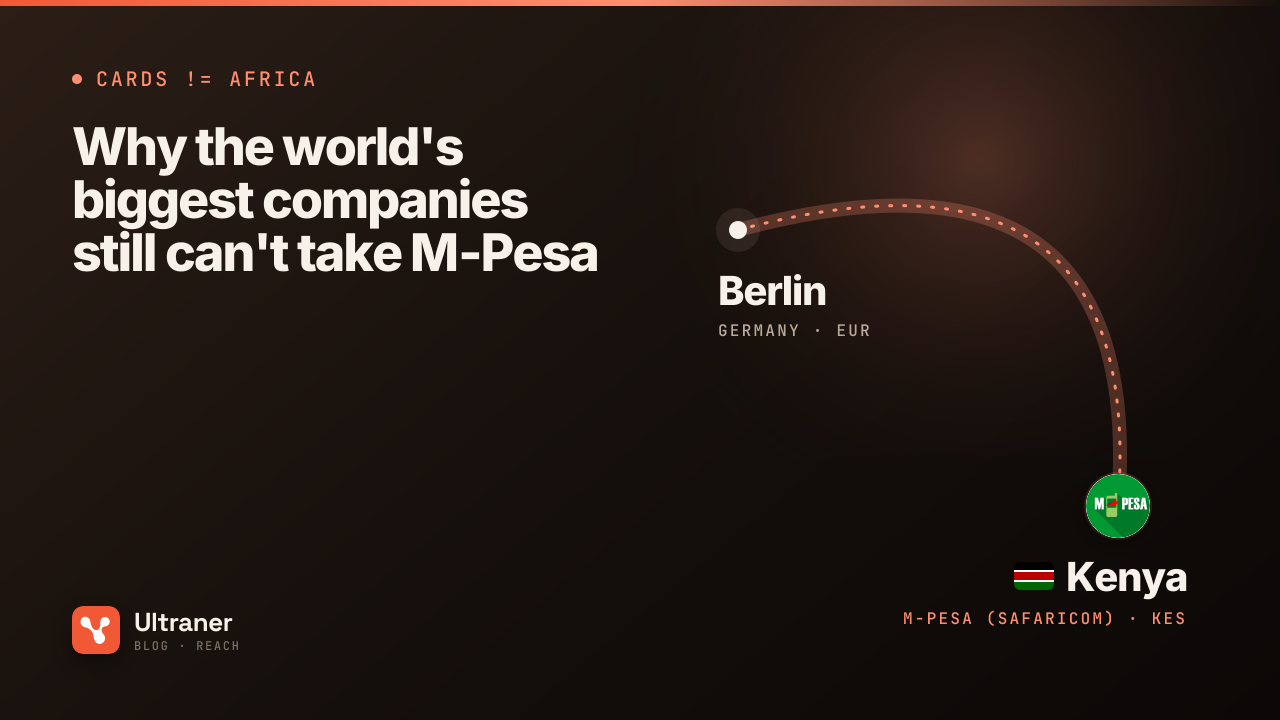
Some of the best-engineered checkouts on earth stop working at the African border.
A streaming service, a design tool, a cloud provider, a game store. Each has spent years refining how the world pays it: cards, wallets, local schemes in Europe and Asia, one-click everything. Then a customer in Nairobi or Dakar arrives, wants to pay, and is shown a card form. Many of them do not have a card that works online. Most of them have a mobile money wallet they use every day 1. The sale is lost, and on the company's dashboard it looks like low demand.
It is not low demand. It is a missing payment method. And the reasons it is still missing in 2026 are worth understanding, because none of them is "Africa is too hard".
Reason one: mobile money is not one thing
From outside, "mobile money" sounds like a single network you could integrate once. It is dozens. M-Pesa in Kenya is run by Safaricom; M-Pesa in Tanzania is run by Vodacom, with a different currency and a different integration. Senegal has Wave, Orange Money and Free Money. Ivory Coast has its own mix again. The GSMA counts hundreds of live services across the continent 2.
Each network has its own contract, its own API, its own settlement terms and its own rules for what a merchant must prove before going live. A global company looking at that list sees a year of partnership work per country. So it waits.
Reason two: the payment stack was built around cards
Global payment infrastructure grew up around a model where the customer types a card number, the merchant's provider asks the card network, and an answer comes back in seconds. Everything downstream (fraud checks, retries, refunds, subscriptions) assumes that shape.
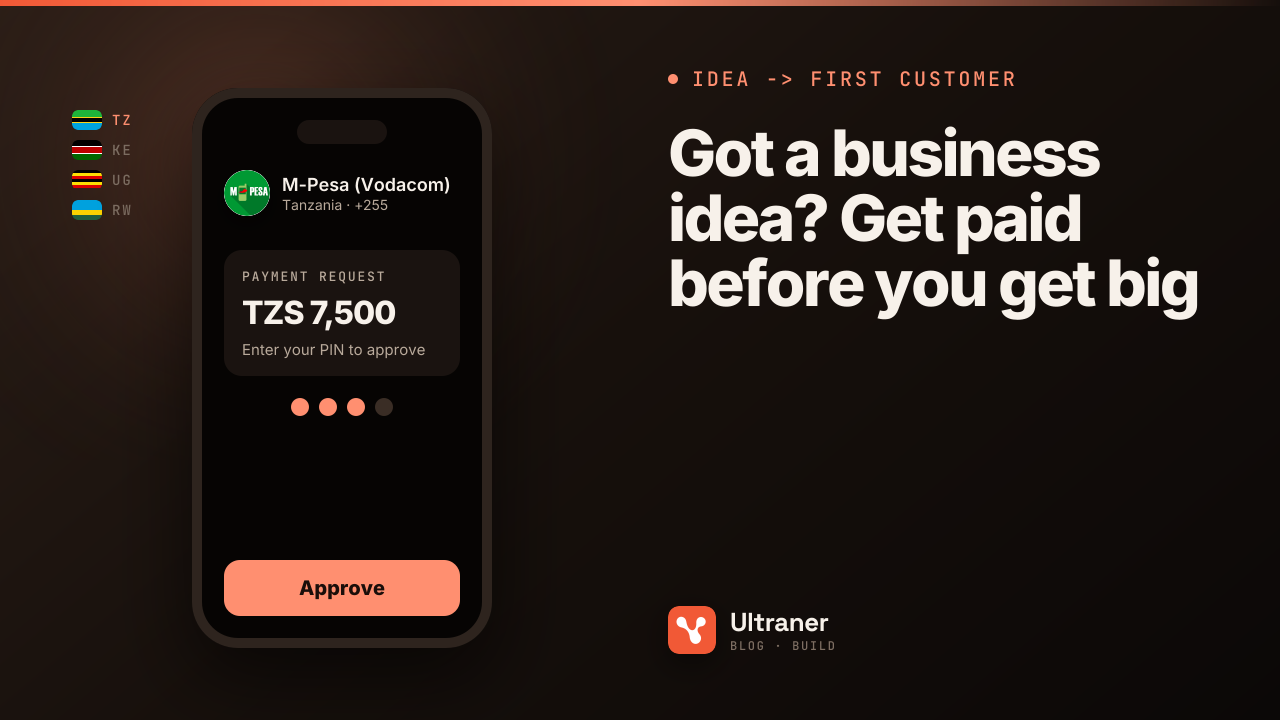
Mobile money has a different one. The merchant asks; the customer receives a prompt on their phone; the customer approves with a PIN, maybe now, maybe in a minute, maybe never. The result arrives later. A checkout, a billing system or a subscription engine that expects an instant yes or no does not know what to do with "pending, ask again shortly". Fitting the second model into a stack built for the first is real engineering, and it rarely wins a roadmap slot against markets that already convert.
Reason three: the money has to come home
Collecting shillings in Kenya is only half the problem. The company needs those shillings to end up somewhere useful: converted, settled to a bank account in another country, reconciled against orders, reported for tax. Each African currency has its own decimals (some, like XOF and XAF, have none at all), its own exchange rules and its own settlement timing. Without a partner that handles collection and settlement together, the finance team says no before the product team finishes the slide.
Reason four: the market looks small from far away
Look at one African country at a time and the numbers look modest: a few million online customers here, a few million there. ITU estimates that a large share of Africa's population is still offline 3. A planning spreadsheet that judges each market alone will always rank Kenya below Germany.
But the right unit is not one country. It is the set of countries a single integration can reach, and that set grows every year.
What fixing it actually takes
The fix is not for every global company to build what the networks built. It is one connection that already speaks to all of them.
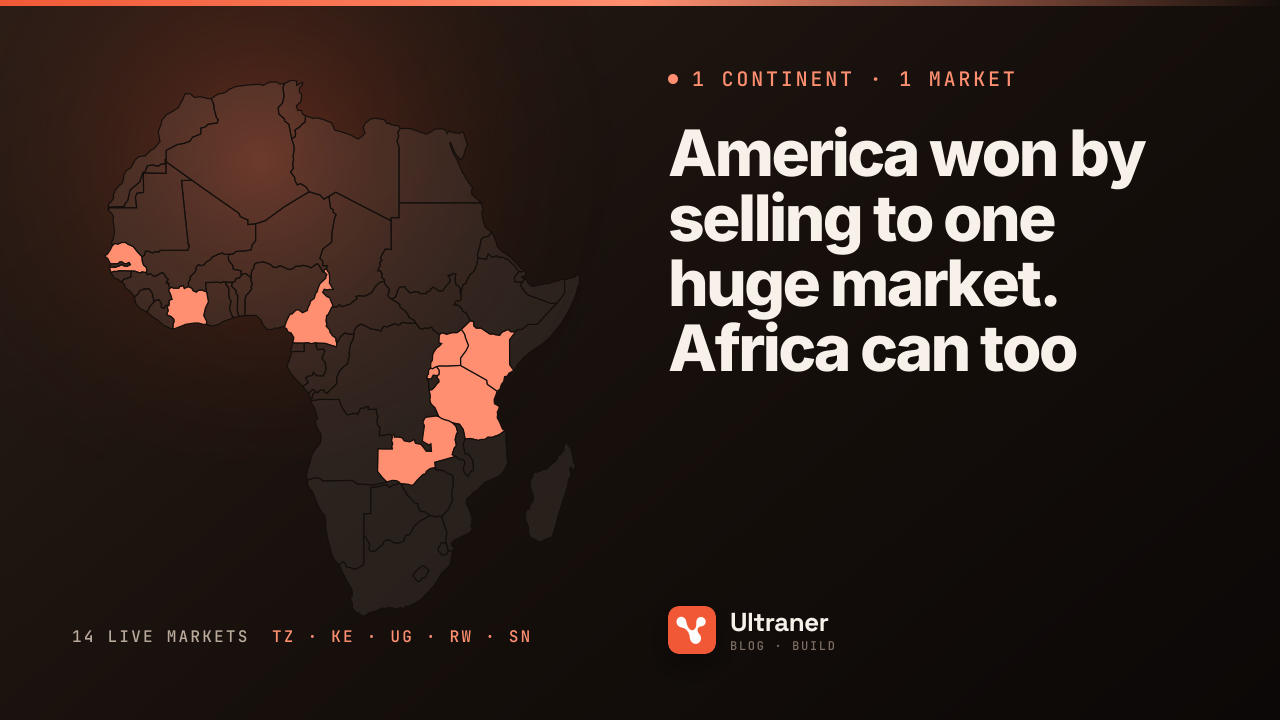
That is the job Ultraner does. A company integrates once. Its checkout gains the payment methods African customers already use (M-Pesa, Airtel Money, MTN MoMo, Orange Money, Wave and the rest) across fourteen live markets, alongside cards processed by Stripe and PayPal, through the same API. The customer sees a familiar prompt on their phone. The company sees one balance, settled to its bank account anywhere in the world. Amounts, decimals and phone formats are handled per market, so the engineering team does not have to learn each one.
For a company that already has a card checkout, nothing is replaced. Mobile money is added next to it. Keep your Stripe setup and add mobile money next to it shows how that looks in practice.
The question to ask your team
If your product has signups from Africa and almost no revenue from them, ask one question: what payment methods did we offer those people? If the answer is "cards", you have not tested African demand yet. You have tested African card ownership.
The companies that answer that question first will own their categories on the continent before the rest notice. Start with accepting payments from African customers, or read the docs and see how short the integration is.